Toolkits
Stakeholder Toolkit.
Every module in this Toolkit leads with the values CSE already reflects such as protection, care, dignity, responsibility and partnership.
About the Stakeholder Toolkit
This Stakeholder Engagement Toolkit serves as a CSE counter-messaging resource. It is developed in conjunction with a Digital Toolkit comprising of social media templates and easy to use scripts and information.
It is designed to be used directly in a classroom, a community meeting, a policy briefing, or a media interview in a practical and useable manner. Each module builds toward a specific, practical output, and several modules include standalone resources designed to be used on their own with the appropriate audience.
This Toolkit is developed for:
• Community and traditional leaders • Religious leaders • Educators • Parents and parent teacher associations • Government stakeholders, including ministries of education and health • NGOs and CSOs.
Getting started
How to use this toolkit
The Toolkit is organised into four modules, each building toward a practical, usable output.
Work through the toolkit
Whether you’re looking for standalone resources or evidence and information about CSE and its outcomes, the Toolkit has you covered.
Find your audience
Jump to Module 4 if you are looking for stakeholder specific information and resources. There are six stand alone guides that speak to these concerns and priorities.
Use the pullouts
Download individual pull outs to use in the classroom, community hall or wherever you are.
GETTING TO WORK
Explore the Modules
Four modules have been designed to ensure that you feel well prepared to answer and engage with any Stakeholder on CSE.
For educators
Bringing values into the classroom
Teachers play a pivotal role in ensuring that barriers to CSE are not realised in the classroom.
Key message
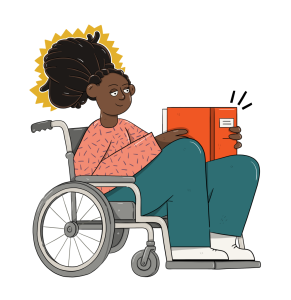
Inclusive delivery: ensuring that CSE reaches every learner
YPAR research found access to CSE is still focused on urban areas within mainstream schooling. The effect of this is that youth with disabilities are too often left out of CSE delivery in practice. In Ethiopia specifically, the research highlighted a critical need for CSE to reach rural youth and youth with disabilities, who are often marginalised from CSE information that reaches other young people. Young people with disabilities also face additional, specific barriers including stigma, exclusion from mainstream CSE delivery, and limited access to information in a format they can actually use.
In practice
This requires the following from teachers and educators:
- Do not assume a learner with a disability needs less of the curriculum, or a simplified version of it. This is reflected in the same positive outcomes emerging from youth with disabilities from standardised CSE content.
- Use inclusive teaching methods. This may include large-print, Braille, or audio versions of materials where a learner needs them and adapting how teachers check understanding for learners with different communication needs.
- Regularly check in with the school’s leadership whether any Braille, audio, or other accessible versions of CSE materials are available, and if not, whether producing them is something the school or Ministry can prioritise or resource.
For parents
Support for the home
CSE works alongside parents, families and faith leaders, reinforcing the values they already teach.
Key questions
Doesn’t this take away my role as a parent, or undermine our faith?
CSE isn’t there to replace you as a parent, or to replace your faith community because it can’t, and it isn’t trying to. It’s there for the moments you can’t always be present for. Done well, it equips your child to come back to you and to their faith with their questions, not to move away from them.
The evidence
In Malawi, YPAR findings showed that when youth were exposed to CSE, they were more likely to follow advice from teachers and parents, not take away from their authority.
Is the content age-appropriate?
CSE should be taught in stages matched to a child’s age and stage of development. This means that what a six-year-old learns (for example, naming body parts, understanding personal boundaries) looks nothing like what a sixteen-year-old learns. You have the right to ask your school exactly what is taught at your child’s grade level, and to see the actual materials.
For community and traditional leaders
Maintaining traditional and cultural values
While community and traditional leaders do not play a formal role in education, they continue to play a gate keeping role within some communities when it comes to how information is perceived, received and implemented.
Key message
Lead with shared values and the right terminology
Start from the values that a community already cares about. Remember that terminology and words matter within these types of conversations.
In practice
Lead with values such as care, protection, and responsibility, bringing in evidence once trust has been established.
Key message
Use the community’s own concerns
Focus your efforts on the community’s own concerns about young people’s health and wellbeing. Invite them to name these concerns themselves without pre-empting their answers.
In practice
In practice
Guide the conversation with reflective questions rather than making statements. These could include:
- “What worries you most about this?”
- “What experiences have led you to be concerned about this?”
- “Could you explain what this looks like in your community right now?”
For faith leaders
Faith and CSE
While community and traditional leaders do not play a formal role in education, they continue to play a gate keeping role within some communities when it comes to how information is perceived, received and implemented.
Key message
Always focus on ensuring that you clearly communicate the three shared values of protection, dignity and shared responsibility in response to any counter messaging that may arise.
A faith leader can support age-appropriate CSE, including its content on consent, non-violence and non-discrimination, while continuing to teach their own tradition’s position on marriage and sexual ethics.
In practice
Ensure that your messaging includes country specific references and information, including the correct use of terminology and language. Religious and faith-based leaders should understand where the implementation and roll out of CSE within schools and other spaces currently stands and ensure that they are part of policy formulation where possible.
Key message
Use the community’s own concerns
Focus your efforts on the community’s own concerns about young people’s health and wellbeing. Invite them to name these concerns themselves without pre-empting their answers.
In practice
In practice
Guide the conversation with reflective questions rather than making statements. These could include:
- “What worries you most about this?”
- “What experiences have led you to be concerned about this?”
- “Could you explain what this looks like in your community right now?”
For government officials
Nationally owned and implemented CSE
National CSE curricula should be developed and contextually adapted by national ministries.

Key message
Partnerships are essential
Religious and cultural leaders play a vital role in Ugandan, Malawian and Ethiopian societies and their influence is directly relevant to how CSE is perceived, received and implemented. Therefore, establishing partnerships with these groups is a necessary step in working towards the effective uptake and implementation of CSE in schools and at home.
In practice
Identify the religious and traditional leaders and networks with real influence over CSE acceptance locally, including existing regional networks and hold meaningful engagements with these groups with the purpose of purely listening to their concerns and views before any formal policy reviews or drafting begins.
For CSOs and NGOs
Bridging the gap between schools and communities
CSOs and NGOs can act as both responders to anti-CSE messaging while amplifying consistent and accurate CSE information

Key message
Youth have reported feeling safe and heard at Youth Centres in Malawi
“…youth centres have fellow young people, so we understand each other, we can talk and advise each other when we go there or when we are in our groups” Out-of-school Youth, Male).
“… the facilitators from the youth centre are good when they come because they encourage all of us not to fear and they make you feel free to ask anything without being judged” (Out-of-school Youth, Male).
Take the full toolkit with you
Download the complete Stakeholder Toolkit as a document for offline use, printing, and sharing.